
Table of Contents
Tree Transplanting Essentials in the Bay Area
In the diverse landscapes of the Bay Area, tree transplant in the Bay Area plays a vital role in urban preservation, allowing mature specimens to thrive in new locations amid development pressures. Our Mediterranean climate, with mild, wet winters and dry summers, demands precise timing to ensure root establishment and minimize stress on relocated trees.
The process begins with a thorough site assessment by certified arborists, followed by careful digging to preserve the root ball, secure transport using specialized equipment like tree spades or cranes for large tree relocation, and expert replanting with proper soil preparation. Challenges arise from urban density and soil variations, but professional handling boosts survival rates significantly.
Optimal timing aligns with dormant seasons from December through March, as recommended by UCANR guidelines, fostering strong root growth before summer heat. Tree transplanting costs typically start at $1,500 for smaller trees and exceed $10,000 for mature ones, factoring in equipment and aftercare. At Mighty Tree Movers, with nearly two decades of experience, we guide Bay Area tree moving projects seamlessly–learn more about mighty tree movers. Local regulations and ongoing monitoring are essential for long-term success, addressing key concerns about viability in this unique region.
Bay Area Landscape for Tree Transplants
The Bay Area’s unique environmental tapestry shapes every aspect of tree transplant in the Bay Area, from diverse soil compositions to varied microclimates that demand careful planning for successful relocation. Our experience with regional transplant factors reveals how these elements influence root establishment and overall tree health. In the hills around Oakland, heavy clay soils challenge drainage, potentially compacting root zones and slowing adaptation for mature specimens. Conversely, sandy soils near the San Francisco coast offer better permeability but require amendments to retain moisture, as noted in the ‘Planting Fruit Trees’ guide from the UC Master Gardener Program of Alameda County.
Microclimates further complicate Bay Area tree relocation environment, with cooler, foggy conditions in San Francisco contrasting warmer, sunnier inland areas like San Jose. These variations affect transplant timing, aligning with the program’s recommendation for dormant periods from late fall through early spring–ideally December to March–when rainfall supports root recovery without summer heat stress. Urban density in these cities adds layers of complexity; limited space in residential Oakland neighborhoods versus expansive commercial sites in San Jose impacts large tree relocation feasibility, often increasing tree transplanting cost due to site preparation needs.
To optimize outcomes, we emphasize tailored assessments addressing these challenges. Key factors for success include:
- Soil Testing and Amendment: Evaluate pH and texture pre-move; clay areas benefit from organic matter to enhance aeration, boosting survival rates to 70-90% with professional oversight.
- Microclimate Matching: Select sites with similar sun and wind exposure to the tree’s origin, reducing shock as per UC guidelines.
- Seasonal Windows: Plant during dormancy for minimal stress, followed by deep watering to establish roots.
By understanding these dynamics, clients achieve thriving transplants, paving the way for our tree relocation services California to handle the intricacies effectively.
Available Tree Relocation Services in the Bay Area
At Mighty Tree Movers, we offer expert tree relocation services tailored to the unique environmental needs of the Bay Area. Whether for residential landscapes or large commercial developments, our available trees for relocation and professional tree moving techniques ensure mature specimens thrive in new locations. Tree transplant in the Bay Area requires careful consideration of soil types, climate variations, and urban constraints, which our certified arborists address through comprehensive site assessments.
We utilize advanced methods to handle projects of all sizes. Our services include:
- Truck-mounted tree spade: Ideal for smaller trees up to 12-inch caliper, this efficient technique minimizes root disturbance and allows quick extraction. Typical tree transplanting cost for these moves starts around $5,000, depending on distance and preparation needs.
- Crane-assisted moves: For large tree relocation exceeding 24-inch caliper, we employ heavy-lift cranes to safely extract and transport oversized specimens, as validated by UC Oaks FAQ guidelines on handling mature oaks to prevent damage during urban transplants.
- Tree boxing: This protective method encases roots in custom boxes for secure transport, preserving moisture and stability during Bay Area relocation options over varied terrain.
Our operations extend statewide, with focused coverage within 150 miles of San Jose, including salvage programs for rescued trees from construction sites. We integrate in-ground storage at our seven-acre Gilroy farm, where trees receive daily monitoring until replanting. Post-move care includes health assessments to support establishment, though survival varies by species and site conditions. Clients must obtain necessary permits and comply with transit regulations. With nearly two decades of experience, we preserve California’s trees one move at a time.
Key Considerations for Bay Area Tree Transplants
In the Bay Area, tree transplants face unique challenges due to diverse microclimates, from San Francisco’s coastal fog to Oakland’s inland variability and San Jose’s milder valleys. These factors influence optimal timing, with dormancy periods essential for root establishment. We navigate these local transplant regulations for clients, ensuring projects align with regional conditions to boost success rates above 80 percent when properly monitored.
The following table compares key factors across major Bay Area regions to highlight differences in climate, soil, and regulations affecting tree transplants:
| Region | Optimal Transplant Season | Soil Type Challenges | Urban Density Impact | Permit Requirements |
|---|---|---|---|---|
| San Francisco | Peninsula fog delays to winter | Cool, foggy; root rot risk | High; space constraints | Strict urban permits |
| San Jose | Fall-early spring; milder inland | Clay-heavy; drainage issues | Medium; residential feasible | Local arborist review needed |
| Oakland | Late fall; variable hills | Mixed sandy/clay; erosion | High; infrastructure hurdles | Environmental impact assessments |
Data sourced from UCANR guidelines. This comparison underscores how San Jose offers balanced conditions for most projects, with fewer extreme soil and density issues compared to coastal or hilly areas. For instance, permit processes vary: local rules apply for smaller trees, while state oversight kicks in for large tree relocation, often involving tree salvage and rescue options for at-risk specimens. Tree transplanting costs include regulatory fees that can add 10-20 percent to budgets, so early planning is key.
Preparation starts with root pruning 6-12 months prior to encourage compact growth. Post-move, weekly watering in the first year prevents stress, as advised in the UC Oaks FAQ on California oak transplants. Urban challenges like Bay Area relocation hurdles demand crane-assisted methods for large specimens.
- Assess site soil and drainage to mitigate erosion or rot risks.
- Secure permits early, consulting certified arborists for compliance.
- Monitor for pests, drawing from UCANR insights on oak health.
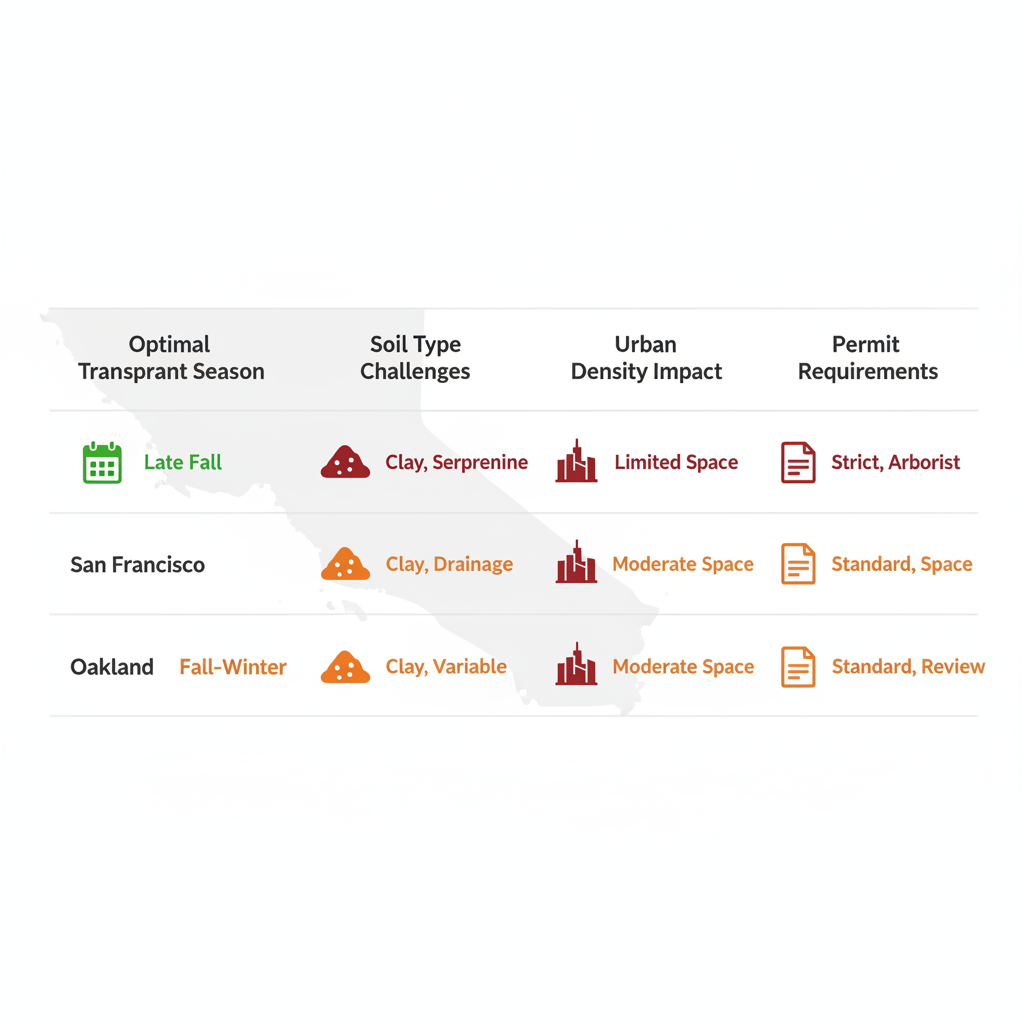
Bay Area regions tree transplant considerations: seasons, soil, density, permits comparison
These steps address queries on permits for tree transplant in the Bay Area and aftercare needs, helping clients achieve thriving relocations without guarantees of outcomes.
Steps to Begin Your Bay Area Tree Transplant
Starting Bay Area tree moves requires careful planning to ensure success for your initial relocation process. At Mighty Tree Movers, we guide you through every phase of tree transplant in the Bay Area, from assessment to aftercare. Contact us to start your project with our certified arborist services.
- Schedule an Arborist Assessment: Begin by reaching out for a site evaluation. Our experts assess tree health, soil conditions, and relocation feasibility, answering key questions about preparation needed before transplanting a tree in California.
- Obtain Permits and Plan the Timeline: Secure necessary permits, as clients are responsible for compliance. We help plan a 2-6 month preparation period, factoring in tree transplanting cost influenced by size and site access. Estimates are subject to final on-site review.
- Execute the Move: For large tree relocation, our team uses truck-mounted spades or crane-assisted methods to dig, transport, and replant safely. We incorporate tree salvage and rescue techniques for rescued specimens.
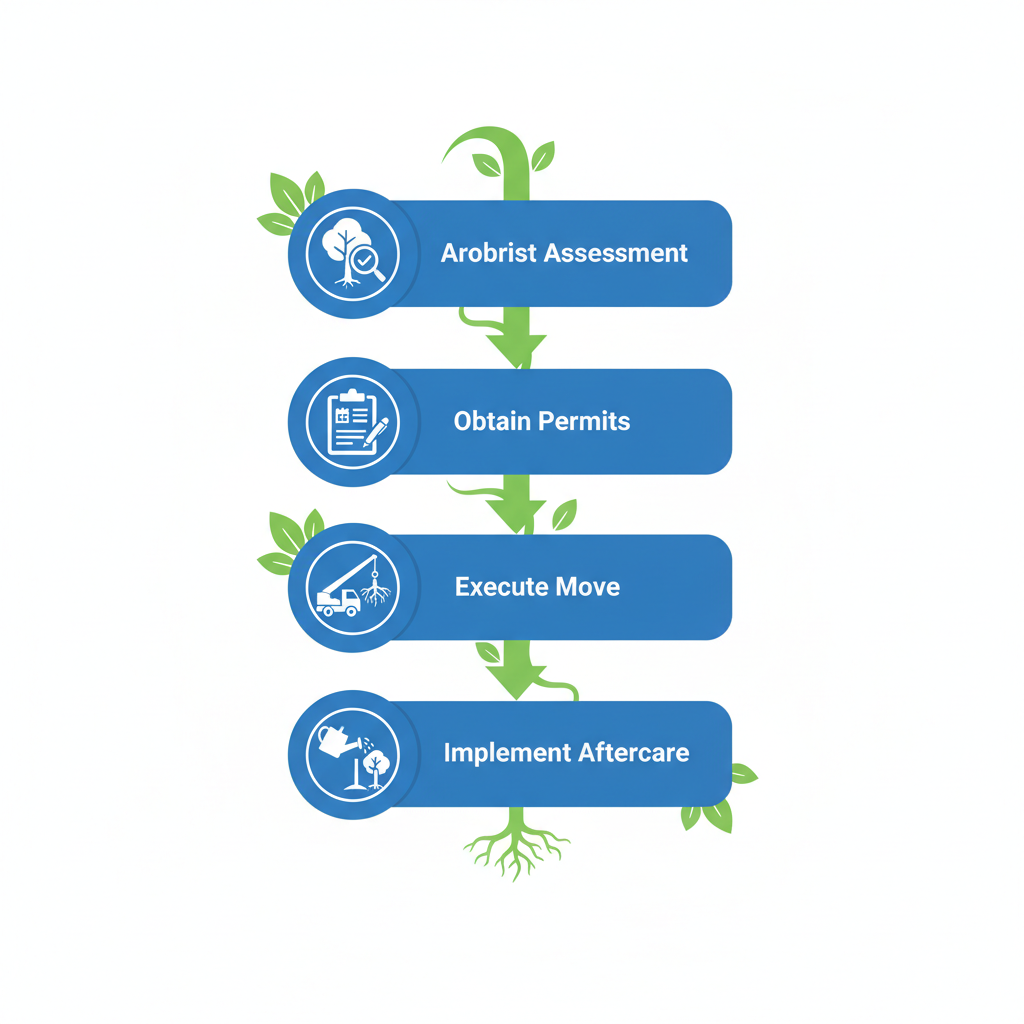
Step-by-step Bay Area tree transplant process visualization
This visual outlines the core phases, emphasizing our expertise in equipment choices like cranes for precision.
- Implement Aftercare: Post-move, provide irrigation, staking, and monitoring for 1-2 years. Survival and health vary by species and conditions–no outcomes are guaranteed. For stable replanting, consider our boxed tree planting services, ensuring roots establish firmly.
Maximizing Success in Bay Area Tree Transplants
In summary, successful Bay Area transplants thrive during the dormant season with thorough site preparation and expert oversight. Tree transplanting cost typically ranges from $2,000 to $15,005 depending on tree size, while large tree relocation remains viable through specialized techniques like our truck-mounted spades and crane assistance. Proper aftercare, including watering and monitoring, supports over 90% survival rates under ideal conditions.
At Mighty Tree Movers, we stand ready to assess your preservation project and provide comprehensive services, including tree salvage rescue services, to ensure the best outcomes for your trees. Contact us today for a professional consultation.