
Table of Contents
Tree Transplanting Essentials in California
Tree transplant in California involves carefully relocating established trees to new sites, ensuring their health amid the state’s varied landscapes. At Mighty Tree Movers, we provide tree relocation services California using advanced techniques like truck-mounted spades and crane assistance, minimizing stress on trees while complying with state regulations. Our certified arborists lead assessments to determine feasibility, drawing from resources like the Arborist List that emphasize qualified experts for successful outcomes.
Common reasons for relocating mature trees statewide include construction projects, landscaping redesigns, and salvaging trees from development sites. California’s diverse climate zones and soil variations present unique challenges, influencing factors such as the best time to transplant trees in California, ideally during dormant seasons like late fall or early spring. We offer comprehensive services from pre-move preparation and safe transport to post-relocation monitoring, including a relatable example of moving a mature oak in a residential urban setting to a rural property.
Tree transplanting cost in California varies based on tree size and distance, but professional tree moving practices ensure value through expertise. Understanding these essentials prepares you for regional considerations, where California’s geography shapes specific transplant needs.
California’s Landscape and Tree Relocation Needs
California’s diverse landscapes play a pivotal role in tree transplant in California, where varied climates and soils demand customized relocation strategies. From coastal fog to inland deserts, these environmental factors influence tree health during moves, ensuring successful adaptation post-relocation. At Mighty Tree Movers, our nearly two decades of experience allow us to navigate these challenges, preserving California’s trees one move at a time across residential and commercial projects within 150 miles of San Jose and beyond.
The state’s regions present unique conditions that arborists must consider for optimal outcomes. Northern California features cooler, moist environments ideal for evergreens, while the Central Valley’s hot summers require careful irrigation planning. Southern areas grapple with arid conditions and urban constraints, affecting everything from root preservation to transport logistics. These variations highlight why the best time to transplant trees in California aligns with dormant seasons, such as late fall in the north or early spring in the south, to minimize stress. Development pressures often necessitate tree salvage, where regulations like San Jose’s permit requirements for ordinance-size trees–demanding site plans and potential arborist reports–ensure compliance and environmental protection.
The following table compares environmental factors across California’s key regions to illustrate location-specific considerations for tree transplant:
| Region | Climate Zone | Soil Type | Common Tree Species | Relocation Challenges |
|---|---|---|---|---|
| Northern California | Coastal and Mediterranean | Loamy and clay | Oaks, redwoods | High moisture, root protection |
| Central Valley | Hot-summer Mediterranean | Sandy loam | Citrus, almonds | Drought stress, irrigation needs |
| Southern California | Semi-arid and coastal | Sandy and rocky | Palms, eucalyptus | Water conservation, urban density |
This comparison underscores how regional differences shape our approaches, from enhanced watering protocols in the Central Valley to protective wrapping for coastal species. For instance, tree transplanting cost in California can vary based on these factors, with arid southern moves often incurring higher irrigation expenses. In our projects, we adapt by leveraging our seven-acre in-ground storage farm in Gilroy, operated by a tree relocation company Gilroy committed to expert tree relocation services.
A recent case study involved relocating a mature oak in Northern California amid urban expansion. Our certified arborists preserved the large root ball during transport, aligning with local permit guidelines from San Jose’s process, which requires photographs and fees starting at non-refundable application costs. This ensured minimal disruption and compliance, demonstrating our arborist consulting capabilities.
Such adaptations across statewide relocation needs emphasize tailored planning to address regional tree moving challenges, from soil amendments to post-move monitoring, fostering long-term vitality without assured outcomes varying by site conditions.
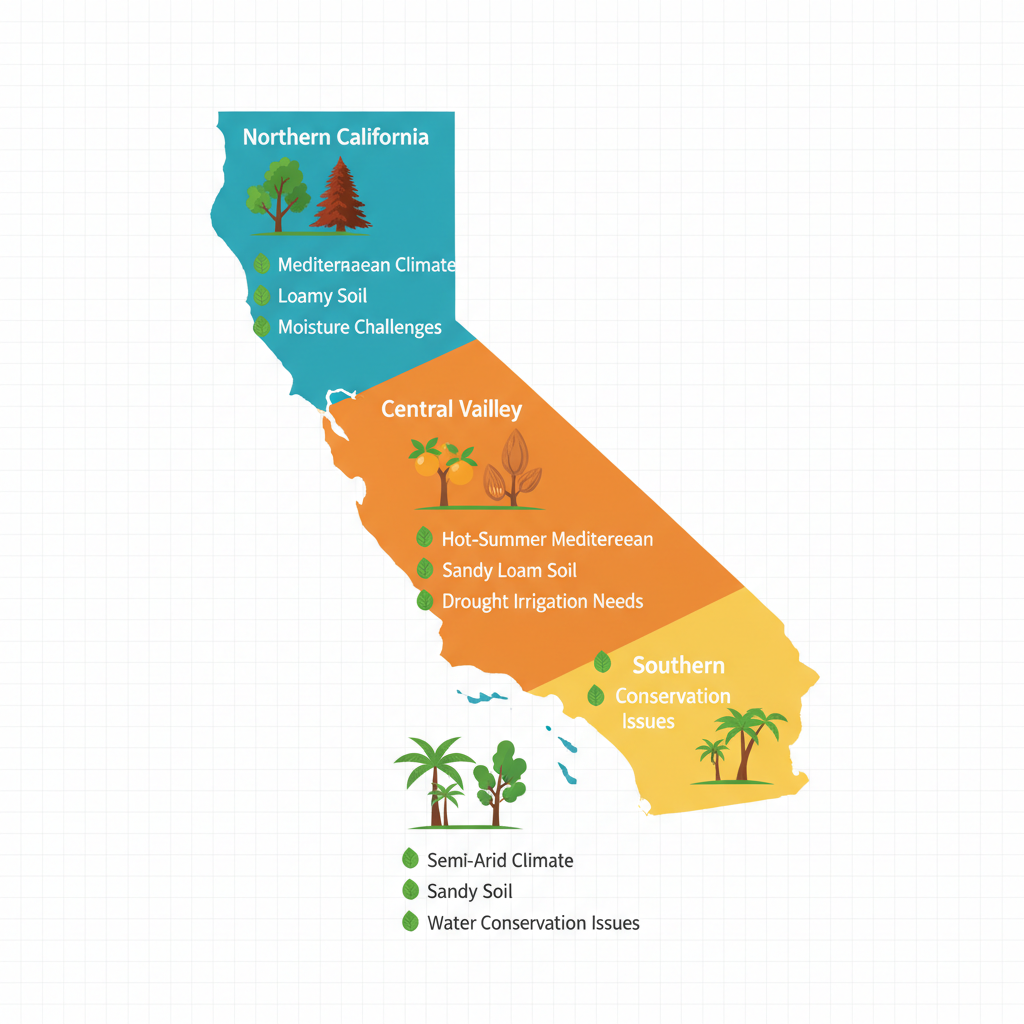
California’s regional tree relocation landscape and environmental needs
Tree Relocation Service Options in California
At Mighty Tree Movers, we specialize in tree transplant in California, offering comprehensive relocation services tailored to preserve mature trees for residential, commercial, and municipal projects. Our integrated approach covers everything from initial consultation to post-move monitoring, ensuring optimal outcomes for your landscape needs.
We employ state-of-the-art truck-mounted spades for efficient root ball extraction, ideal for mid-sized trees up to 30 feet tall. This method, supported by expert insights from industry resources like “The ABCs of Moving Large Trees,” involves precise digging to maintain soil integrity and hydration, enhancing survival rates. For larger specimens, our crane-assisted moves handle trees exceeding 50 tons, as demonstrated in a recent commercial project where we relocated a heritage oak for a San Jose development, navigating tight urban spaces with minimal disruption.
Tree boxing provides secure transport protection, encasing roots in wooden crates to prevent shifting during haulage across the state. We integrate tree salvage rescue services with off-site storage at our Gilroy farm, where rescued trees receive daily care until replanting. Certified arborists conduct pre-move assessments to evaluate health and the best time to transplant trees in California, typically fall or early spring for reduced stress. Post-relocation monitoring includes watering protocols and pest checks, drawing on proven techniques for air exchange and nutrient uptake.
Service tiers vary based on tree transplanting cost in California, influenced by size, distance, and method complexity–spade moves suit smaller budgets, while crane operations address premium large-scale needs. These professional relocation methods adapt to diverse sites, from coastal properties to inland developments.
Regional soil and climate factors further refine our service selection, ensuring adaptability statewide.
Key Considerations for Tree Transplant in California
When planning tree transplant in California, several key factors influence success and feasibility. We prioritize timing, costs, and regulations to ensure smooth relocation projects. Our experience with mature specimens highlights the importance of strategic preparation for optimal outcomes.
The best time to transplant trees in California aligns with the tree’s dormant period, typically fall or winter. During these seasons, reduced foliage minimizes stress, allowing roots to establish before summer heat. Fall transplanting benefits from cooler temperatures and autumn rains, while winter moves suit evergreens in milder coastal areas. We recommend assessing local climate variations, as prolonged droughts or freezes can impact recovery. Insights from large-scale moves, like those in municipal developments, underscore avoiding spring for most species to prevent sap flow disruptions.
Tree transplanting cost in California varies based on tree size, distance, and site access, often ranging from $1,000 for small specimens to over $10,000 for giants. Factors like soil preparation and equipment needs add to expenses, with crane-assisted moves increasing budgets. Budgeting for tree moves should include post-relocation care to support establishment. As certified arborists, we provide detailed estimates after on-site evaluations to align with your project scope.
Regulations for tree transplant in California require state and local permits, especially in protected zones or urban areas. Compliance with municipal codes, such as those in San Francisco developments, prevents fines and ensures environmental adherence. Our tree salvage services California help navigate these, including salvage programs for regulated removals. Clients must secure permits and follow transit rules.
These considerations empower informed planning. Contact us to discuss your tree transplant needs.
Steps to Begin Tree Transplant in California
Initiating a tree transplant in California requires careful planning to ensure mature trees thrive in their new location. At Mighty Tree Movers, we guide clients through these initial relocation phases, integrating expert arborist services with our comprehensive tree relocation process. This approach addresses key concerns like the best time to transplant trees in California–typically fall or early spring for optimal root establishment–and budgeting for tree transplanting cost in California, which varies based on tree size and site specifics.
Our structured steps begin with professional consultation to outline the project scope and provide initial estimates, always noting that final costs depend on on-site assessments.
- Site Assessment: We start with a thorough evaluation by certified arborists to determine soil compatibility, space requirements, and any salvage needs. This step identifies potential challenges early.
- Pre-Move Preparation: Timing is crucial; we prune roots and branches minimally while ensuring adequate watering to reduce transplant shock. For natives, we follow guidelines from resources like the UCANR’s planting advice.
- Transport: Using truck-mounted spades or crane-assisted methods, we safely move the tree to our seven-acre storage farm if immediate replanting isn’t feasible.
- Replanting and Staking: Dig a hole twice the root ball’s width, backfill with native soil, and stake securely. For certain species, our boxed tree planting services protect roots during relocation. Apply mulch to retain moisture, keeping it away from the trunk.
- Monitoring for Establishment: Post-move tree care involves regular watering–deeply but infrequently–and health checks for the first year to promote rooting.
Quick Checklist:
- Schedule arborist consultation
- Confirm permits and best timing
- Prepare site and budget
- Arrange transport and storage if needed
- Plan ongoing monitoring
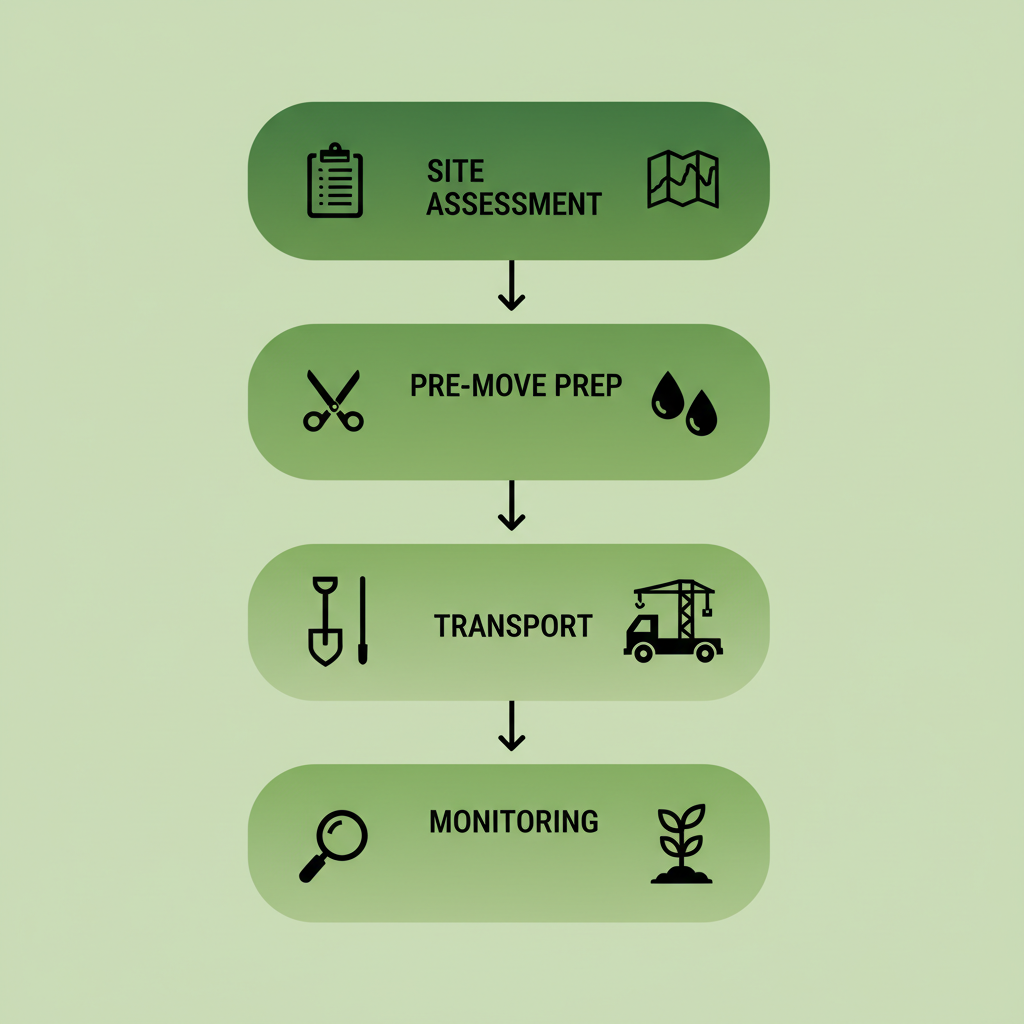
Key steps for successful tree transplant process in California
Navigating Tree Transplant Success in California
Success in tree transplant in California hinges on timing, preparation, and expertise. The best time to transplant trees in California falls in fall or winter to minimize stress, while tree transplanting cost in California depends on tree size, distance, and site conditions. Effective relocation strategies–led by certified arborists–include thorough assessments, careful excavation, transport, and post-move monitoring to support statewide tree preservation.
At Mighty Tree Movers, we’re committed to Preserving California’s Trees, One Move at a Time. Contact us today for tree services California and a personalized consultation to guide your project–no outcomes guaranteed.