
Table of Contents
Understanding Tree Transplanting in California
Tree transplanting in California involves relocating established mature trees to new sites, preserving California’s iconic landscapes while enhancing properties. At Mighty Tree Movers, we specialize in these efforts, safeguarding environmental benefits and aesthetic value through expert relocation.
California’s diverse climates, from coastal fog to inland heat, pose challenges like soil variability and water stress during moves. Our certified arborists conduct site assessments and pre-move preparations, using truck-mounted tree spades and crane-assisted techniques to minimize root damage. We operate a seven-acre in-ground storage farm in Gilroy for rescued trees, achieving industry-standard survival rates of 80-90% with diligent post-relocation monitoring, as noted in tree relocation guidelines. For instance, we recently successfully relocated a mature oak for a residential project in the Bay Area, ensuring its health thrived post-move.
This guide explores tree transplanting cost in California, optimal timing, required permits, and professional tree moving services statewide. As a leading tree relocation company Gilroy, we address regional differences that shape best practices, setting the stage for area-specific insights.
Overview of Tree Transplanting in California Regions
Tree transplanting in California requires careful consideration of the state’s diverse climates and soils to ensure successful relocations. From our headquarters in Gilroy, we deliver expert tree relocation services across regions like the Bay Area, Central Valley, and Southern California, adapting techniques to local conditions for optimal outcomes.
California’s climatic zones significantly influence transplant windows. In Northern California, cooler temperatures allow dormant periods in fall or early spring, promoting root recovery. Central areas, with their Mediterranean climate, favor late fall to early spring to avoid summer heat stress. Southern regions, milder overall, best suit winter moves with minimal dormancy. Soil types vary too: clay in the north demands root ball protection, loamy soils in the central zone need drought-resistant prep, and sandy southern soils require heavy post-move watering. As noted in Planting Natives in Pots, native species adapt well through strategies like amended backfill and mycorrhizal inoculants to enhance root establishment.
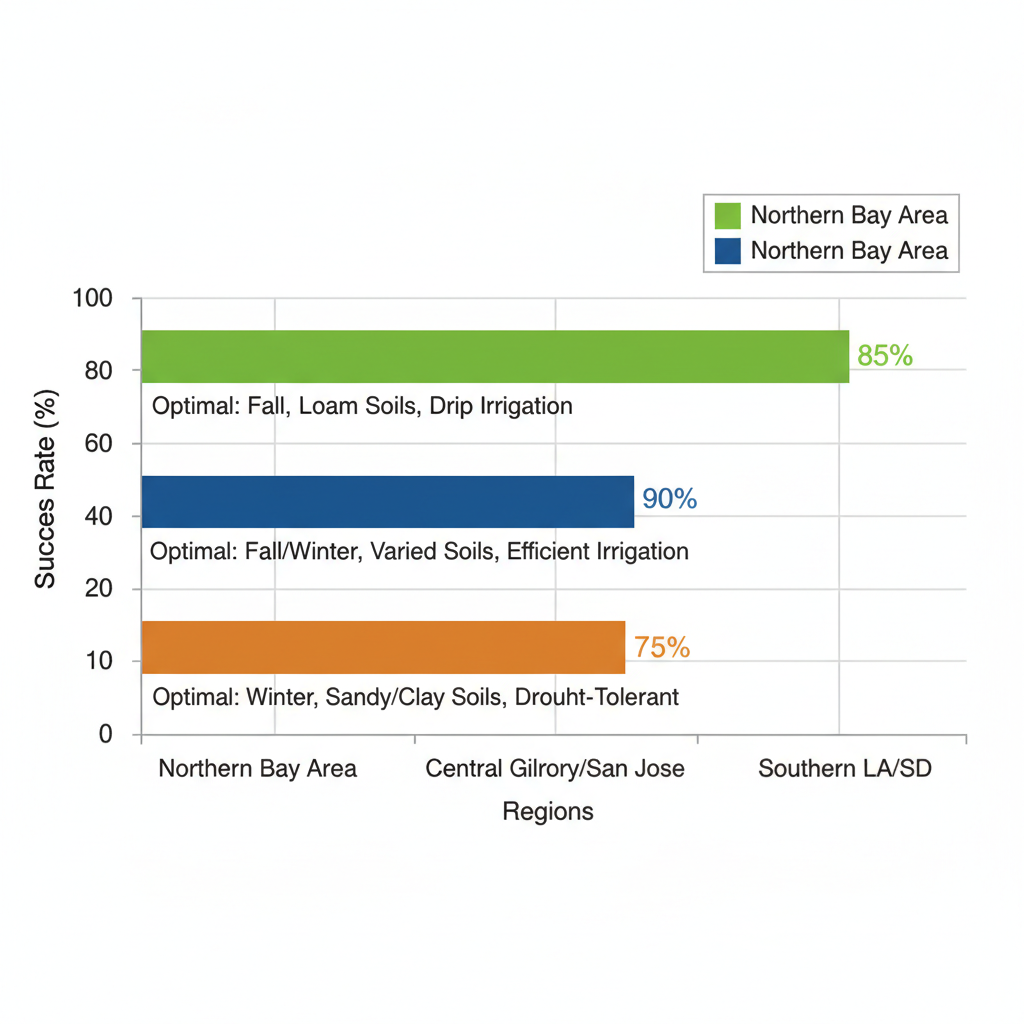
California regional tree transplant success rates comparison
Awareness of these regional tree moving guidelines matters because mismatched timing or preparation can reduce survival rates and increase tree transplanting cost in California. It empowers property owners to plan effectively and select appropriate providers among tree spade companies in California.
| Region | Optimal Transplant Seasons | Soil and Climate Challenges | Success Rate Factors |
|---|---|---|---|
| Northern California (e.g., Bay Area) | Fall (Oct-Dec) or early spring; mild winters aid recovery | Clay soils, fog; root ball protection needed | High with irrigation; 85% survival for natives |
| Central California (e.g., Gilroy/San Jose) | Late fall to early spring; avoid summer heat | Loamy soils, Mediterranean climate; drought risk post-move | Strong due to moderate temps; certified care boosts to 90% |
| Southern California (e.g., LA/SD) | Winter (Dec-Feb); minimal dormant period | Sandy soils, dry heat; heavy watering essential | Variable; urban heat islands lower to 75% without monitoring |
This table, informed by Arborist Best Practices, illustrates how we customize our statewide relocation expertise, such as using truck-mounted spades for central moves or cranes for southern urban sites. Factors like these directly shape service choices and emphasize the value of professional oversight.
Success hinges on species selection–natives outperform exotics with 85-90% viability when timed right–and post-transplant care, including irrigation and monitoring to support root regeneration amid urban stresses. We handle large specimens over 50 feet tall via crane-assisted methods, though clients must obtain local permits; no outcomes are guaranteed as survival varies by site. Key tips include:
- Assess soil compatibility pre-move.
- Employ certified arborists for oversight.
- Schedule boxed tree planting services for protected transport.
Available Tree Relocation Services Across California
At Mighty Tree Movers, we specialize in tree transplanting in California, offering a full suite of professional services designed to preserve mature trees during urban development, wildfire salvage, and landscape redesigns. Our mighty tree movers services cater to both residential and commercial clients, ensuring seamless transitions from extraction to replanting while adhering to state regulations.
We employ advanced techniques to handle tree relocation with precision and care. For smaller to medium-sized trees, our truck-mounted tree spades extract root balls efficiently, typically accommodating trees up to 50 feet tall with root balls measuring 60-90 inches in diameter, as per established Tree Relocation Guidelines. Larger specimens benefit from crane-assisted moves, where certified arborists oversee hydraulic lifting and secure transport to minimize stress. Tree boxing secures trunks and branches for long-haul journeys, protecting against damage during transit. On-site assessments evaluate soil conditions and tree health beforehand, while our seven-acre in-ground storage farm in Gilroy provides temporary care with daily monitoring. These methods address California-specific challenges, such as compact urban sites and fire-damaged salvage operations, integrating arborist consultations at every stage to optimize success.
Our services are readily available within 150 miles of San Jose, with statewide relocation providers managing logistics for broader projects. For end-to-end solutions, we coordinate everything from permits–complying with California Wildlife Permits requiring individual tree assessments for protected species–to post-relocation monitoring. Consider a recent commercial project for a Silicon Valley tech campus, where we relocated 20 mature oaks using spade and crane methods, factoring in tree transplanting cost in California that varies by size and distance. As one of the leading tree spade companies in California, we focus on Preserving California’s Trees, One Move at a Time, though outcomes depend on species and site conditions–no survival is guaranteed.
Key Considerations for Transplanting Trees Locally
When undertaking tree transplanting in California, local factors play a pivotal role in project success. At Mighty Tree Movers, we guide clients through these elements, from budgeting for tree transplanting cost in California to securing necessary approvals. Costs typically range from $500 for small trees to $10,000 or more for large specimens, influenced by various elements.
Key cost factors include:
- Tree diameter and height, as larger trees demand specialized equipment like truck-mounted spades from tree spade companies in California.
- Distance of travel, adding to local relocation expenses.
- Site preparation, including soil testing to ensure compatibility.
These variables help us provide accurate estimates after on-site assessments, though final pricing depends on specific conditions.
Permit processes for moves vary by location. Municipal permits are often required in urban areas like Gilroy, while state incidental take permits (ITP) apply to protected species under California Wildlife regulations. We assist clients in navigating these, ensuring compliance without assuming responsibility for approvals.
To mitigate risks, we recommend arborist assessments pre-move, thorough watering post-relocation, and monitoring for establishment. We also offer tree salvage rescue California services. Urban sites may face more compaction issues than rural ones, but our certified experts adapt strategies accordingly. No outcomes are guaranteed, as survival depends on species and conditions.
Steps to Begin Your Tree Transplanting Project
Embarking on tree transplanting in California requires careful planning to ensure the health of mature trees during relocation. At Mighty Tree Movers, we guide homeowners and commercial clients through this process, addressing factors like tree transplanting cost in California, which can vary based on project scale and site conditions. Our approach emphasizes compliance with local regulations for successful outcomes.
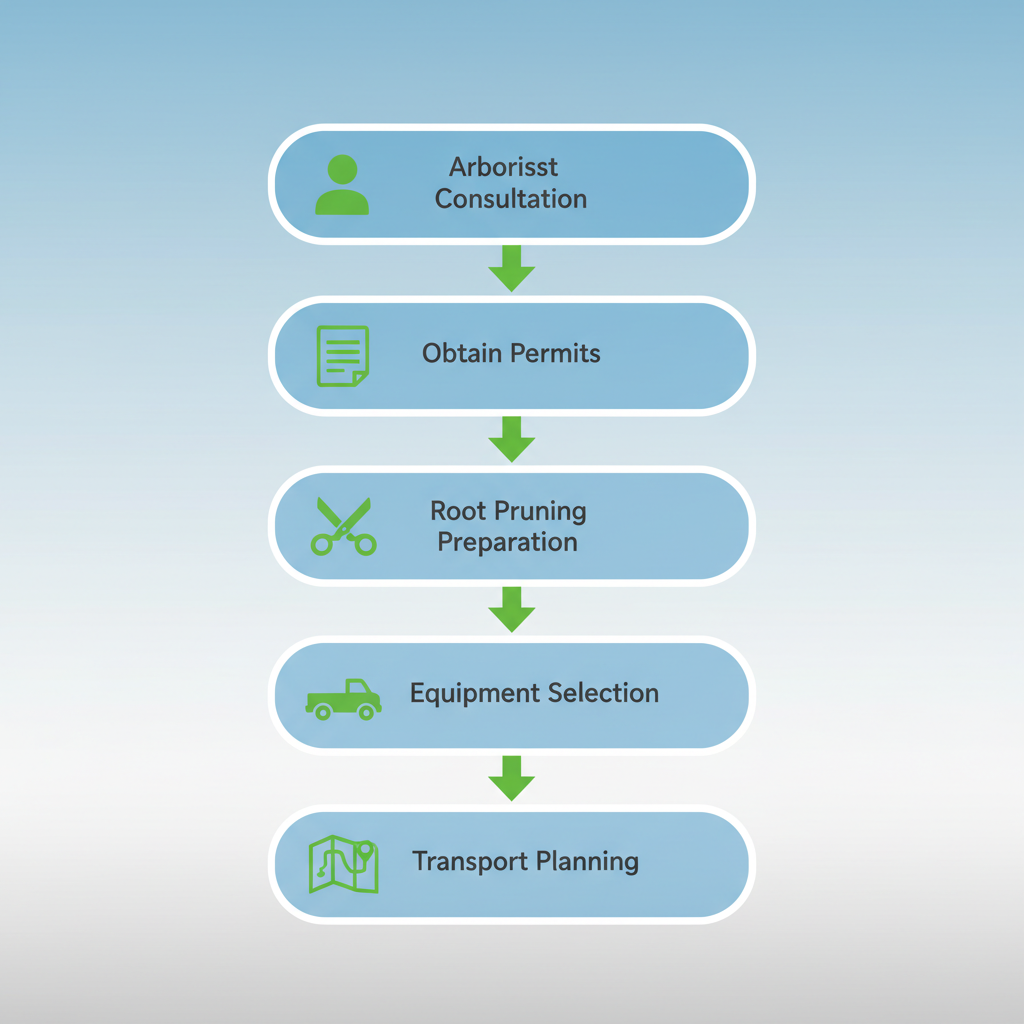
Steps to begin your tree transplanting project in California
- Schedule an Arborist Consultation and Site Assessment: We begin with a certified arborist visit to evaluate the tree’s health, root system, and new location suitability. This step, drawn from Arborist Best Practices, identifies potential challenges like urban root conflicts.
- Obtain Necessary Permits: Based on California rules, we assist in securing permits to avoid delays, ensuring all moves comply with municipal and state guidelines.
- Prepare the Tree with Root Pruning: If needed, we perform pre-move root pruning to encourage new growth, as recommended in Arborist Best Practices. This mitigates transplant shock by preserving vital root architecture.
- Select Equipment: For efficiency, we choose tools from trusted tree spade companies in California, or cranes for larger specimens, tailored to the project’s demands.
- Plan Transport and Planting Logistics: We coordinate secure transport and replanting, incorporating tips from Planting Natives in Pots for native species adaptation through proper irrigation and site prep.
For residential projects, focus on minimizing disruption; large-scale moves benefit from our tree salvage services Gilroy expertise. Remember, while we strive for optimal results, survival depends on species and conditions–no guarantees apply.
Final Insights on Successful Tree Relocation
In our successful relocation summary of tree transplanting in California, optimal timing in fall or spring, combined with early permit acquisition, sets the foundation for thriving transplants. Tree transplanting cost in California varies by size, distance, and soil conditions, while tree spade companies in California utilize advanced spades and boxing for secure moves.
We reinforce statewide best practices through certified arborist oversight and holistic care, as outlined in Tree Relocation Guidelines, ensuring long-term health. Contact Mighty Tree Movers for personalized assessments, leveraging our expertise in storage solutions and available mature trees California.